
Why Are You Afraid? What Jesus' Question Reveals About Your Deepest Fears
Have you ever been asked a question that felt almost insulting given the circumstances? Imagine you're in a small, 15-foot wooden boat on a raging sea, waves crashing over the sides, and someone asks you, "Why are you afraid?" That's exactly what Jesus asked his terrified disciples — and it's the same question he's asking you today.
The Storm Is Real — And So Is Your Fear
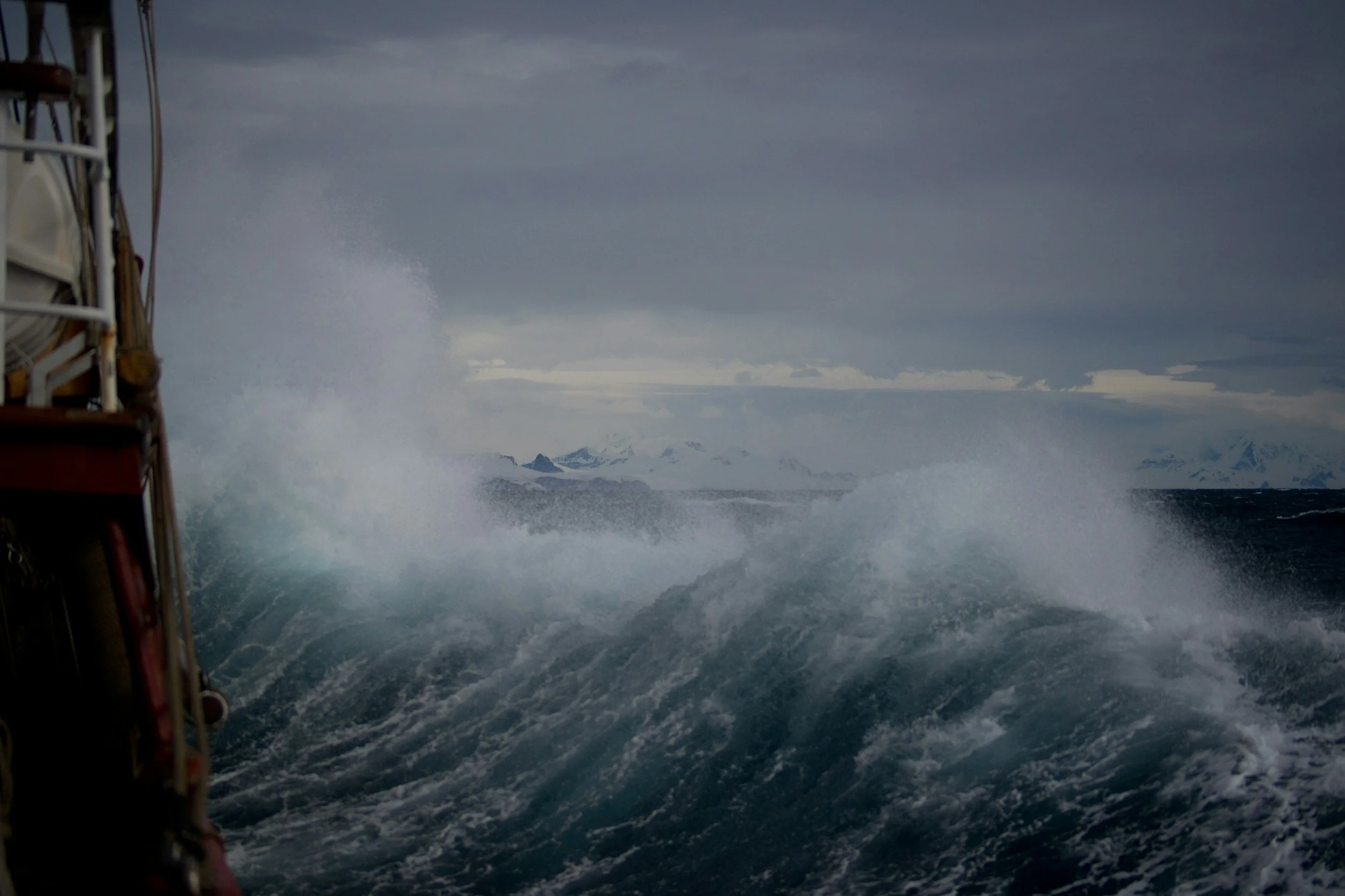
In Matthew 8:23-27, we find Jesus and his disciples caught in a violent storm on the Sea of Galilee. Now, the Sea of Galilee isn't some vast ocean — it's about seven miles wide and 14 miles long. But don't let that fool you. Surrounded by the Golan Heights and deep valleys, the winds can kick up without warning, and waves can reach 8 to 10 feet high. In a small wooden boat, that's absolutely terrifying — even for seasoned fishermen.
The first and most obvious truth in this passage is simply this: the storms of life are real. Some people act as if being a Christian exempts you from fear, that God will somehow excuse you from life's hardest moments. But there's no evidence of that in scripture or in life. If you have lived any measure of life, you realize it's not a question of if the storms will come — it's simply a question of when.
Maybe it's a phone call from a doctor saying the test results aren't good. Maybe it's a child who's made a destructive decision and the consequences are far worse than anyone imagined. Maybe a spouse has walked away, or a job disappeared, or a friendship you trusted simply evaporated. The storms are real. You know it because you've felt the fear creep in.
A Question That Goes Deeper Than It Seems
When the disciples woke Jesus in a panic, crying out, "Lord, save us, we're perishing!" (Matthew 8:25), Jesus didn't immediately calm the storm. He asked first: "Why are you afraid, you of little faith?" (Matthew 8:26).
Now, if you're honest, you've got to admit — that seems like a dumb question. If I'm in that boat, I'm going to be petrified. And yeah, it's probably not great to hear your preacher say that Jesus asked what seems like a dumb question. But it should make you think. Because Jesus doesn't ask the question to shame you. That's not the tone, that's not the inflection at all. He's asking because he wants to invite us into a deeper trust.
The Storm Within the Storm
Here's the deeper truth: there's a fear beneath the fear. There's a storm within the storm.
For Jesus, there's the storm without and there's the storm within. The disciples weren't just afraid of the waves — there was something deeper raging inside them. Years ago, researchers did a study with toddlers. They put them in a bright, comfortable room with toys and their mothers. The toddlers were happy, content, playing joyfully. Then, quietly, the mothers were removed. Immediately, panic spread through the room. The environment hadn't changed. But one key element was missing — the presence and comfort of their mothers.
That's the nature of the storm within. Many of us live like those toddlers — we doubt the presence of Jesus. And Jesus is the one asking, "Have I left the room? Am I not here with you?"
What You Fear Most Reveals What You Trust the Least
This isn't comfortable, and only someone who loves you will have this conversation with you. But the truth is, what you fear most reveals what you trust the least. Faith and fear operate in inverse proportion — the greater the fear, the less the faith. The greater the faith, the fear shrinks.
So what are you afraid of? Imagine for a moment it's just the two of us. Are you afraid of the call that says there's nothing more the doctors can do? Are you frightened of a spouse who might walk out and leave you feeling alone? Are you fearful of outliving your retirement income, or that AI will make your job obsolete, or that you won't get into the college you've set your heart on?
Whatever it is — that's the storm within the storm. That's the heart of the matter.
I was 44 years old when I was diagnosed with leukemia. My son was 12. I was 12 years old when my dad died of leukemia. My greatest fear was that my children were going to grow up without a daddy. I prayed that the leukemia would be cured — and it wasn't until years later. Now, 24 years later, I'm in full remission, living a life I couldn't have imagined and never expected to live. I got to watch my kids grow up, get married, and have their own children. The storm without helped me understand peace within.
Jesus Is Sleeping — And That's the Point
Did you catch that detail in Matthew 8:24? In the middle of the raging storm, Jesus was asleep. He was snoozing while the disciples were terrified. Why does that matter? Because it signals that Jesus was not afraid of any storm without — because the storm within had been quieted by faith. His Father was the pilot of the ship.
There's a story of a large, white-knuckled man on a turbulent flight, absolutely terrified, bouncing around in his seat. Right next to him sat a little girl, maybe 7 or 8 years old, calmly coloring on her lap. Finally, he turned to her and said, "Aren't you afraid?" She said, "No." He looked at her incredulously and asked, "Why?" She smiled and said, "My daddy's the pilot."
Jesus is snoozing in the boat because his Father is the pilot of all our ships.
Fear Is a Weight You Were Never Meant to Carry Alone
Think of it this way. I can hold an empty cup in my hand right now — it's light, no problem. But an hour from now, it would be miserable. Overnight, it would be intolerable. That's exactly what fear does to us. Jesus is the one who said, "Come to Me, all you who are burdened, come to Me and lay your burdens down" (Matthew 11:28).
Horatio Spafford understood this. He lost his four daughters when their ship sank crossing the Atlantic Ocean. When he sailed to meet his surviving wife, the captain paused the ship at the very spot where his daughters had died. And in the depths of that grief, Spafford penned the hymn It Is Well With My Soul — a declaration that even in the worst storms life can bring, there is a peace that surpasses understanding.
Why? Because Jesus is the one who never leaves the room you're in. He never leaves you alone and abandoned. He is always with you.
Putting It Into Practice
Jesus' question — "Why are you afraid?" — is not an accusation. It's an invitation. Here are some next steps to take this week:
Name the storm within. Sit quietly and honestly ask yourself: What am I most afraid of right now? Don't just identify the circumstance — dig deeper. What does that fear reveal about where your trust is weakest?
Bring your fear to Jesus directly. Don't just carry the weight. Follow the instruction of Philippians 4:6-7 and bring your anxieties to God in prayer, trusting that his peace will guard your heart and mind.
Remember who's in the boat with you. When the storm rages, the disciples' mistake was focusing on the waves instead of the One who was with them. Shift your focus from the storm without to the presence of Jesus within.
Let the storm within be stilled. Sometimes God calms the storm around you. But he always offers to calm the storm within you — and that is the deeper healing he is after.
When Jesus asks you, "Why are you afraid?" — he's not mocking you. He's inviting you to look away from the waves, and to find him there in the midst of it all, offering love, comfort, and strength. So that one day, in the middle of your worst storm, you can say with Horatio Spafford: It is well with my soul.