Living Backward: How Easter Changes Everything About Today
Wouldn't it be nice if rewriting the story of your life was as simple as reading it backward?
Because so often life feels heavy and making progress feels hard. Maybe you're tired—maybe tired doesn't even begin to describe it! You've got kids, they've got activities, you are always on the go. Someone told you that the key to happiness was going to a good school, getting a good job, finding the right person, settling down…and yet you still feel empty.
The Power of Living Backward
You don't get where you want to go by reading the story backward, but you can get there by living backward. Living backward means you start with the ending and let it shape today. You let what's true at the finish line redefine how you live right now.
And Easter tells us the ending. Life wins. Hope wins. Jesus wins.
So we live today in light of that reality. Because it's just like Jesus to do what's backward, to do the unexpected.
The Historical Reality of Resurrection
Before we get there, can we just acknowledge that the whole idea of resurrection is wild? In fact, it's so unbelievable that it's completely reasonable to wonder if it really happened. Was Jesus raised from the dead?
While there are numerous 1st century accounts that confirm the life, death, and resurrection of Jesus, there are none that deny it. In fact, ancient secular historians Josephus and Tacitus write about these events and never once dispute their accuracy.
So as unbelievable as the resurrection of Jesus might be, believing it happened isn't an act of blind faith, it's a historical reality, documented by at least 7 independent sources in the Bible and by 2 Roman historians.
Eyewitness Account: The Empty Tomb
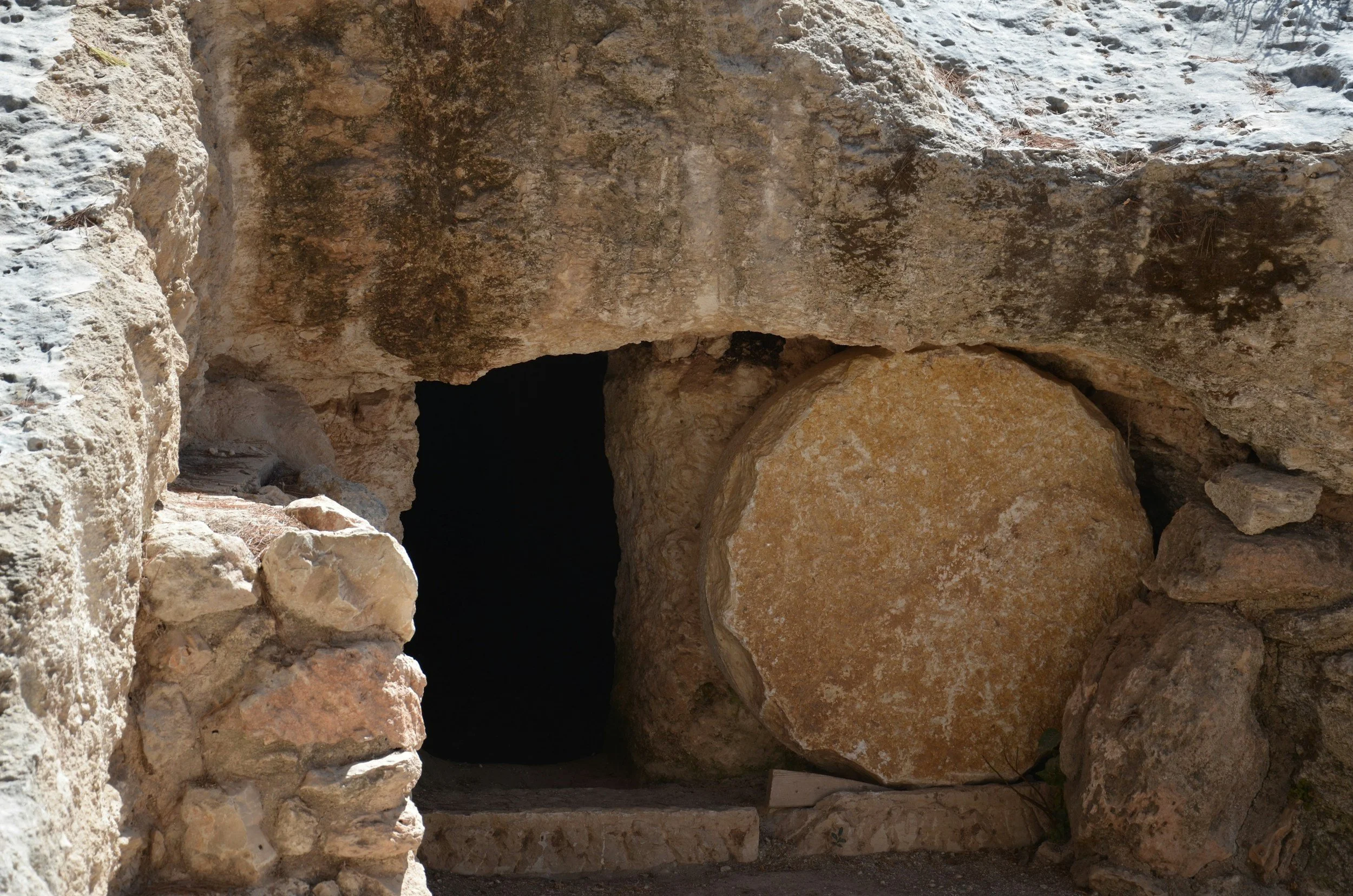
John 20:1 tells us, "Early on the first day of the week, while it was still dark, Mary Magdalene went to the tomb and saw that the stone had been removed from the entrance."
Mary's arrival at the tomb follows an intense week. In the days leading up to this moment, Jesus has been betrayed, arrested, tried, crucified, and he was buried. It's now Sunday morning before daybreak and Mary Magdalene, Peter, and John—one of Jesus' twelve disciples who wrote this account—are among those who arrive at the tomb to perform the burial customs and rituals.
According to John 20:2, Mary "came running to Simon Peter and the other disciple, the one Jesus loved, and said, 'They have taken the Lord out of the tomb, and we don't know where they have put him!'"
The disciples aren't supernatural figures, they are just like us. Their first thought isn't spiritual, it's practical. They don't immediately assume a miracle, instead they assume someone has done something.
The Race to the Tomb
John 20:3-4 records: "So (Simon) Peter and the other disciple started for the tomb. Both were running, but the other disciple outran Peter and reached the tomb first."
This is so good. The three people visiting the tomb on that Easter morning were Mary, Peter, and John. And, yes, it was that John, the one who wrote this down. So here we have the greatest story ever told and John just wants everyone to know that he outran Peter.
John 20:8 tells us: "Finally the other disciple, who had reached the tomb first, also went inside. He saw and believed." Here we go again, with John telling us he's faster than Peter. And he tells us exactly what he saw, who was there and, he says, he believed.
Jesus Does the Unexpected
It's just like Jesus to do the unexpected. After his resurrection, Jesus spends 40 days walking the earth, appearing to his followers in ways that met them exactly where they were.
For the Hurting: Mary is standing outside the tomb, overwhelmed with grief, tears blurring her vision and staining her face. She thinks the story is over. But John 20:14 says, "At this, she turned around and saw Jesus standing there…" Jesus meets her in her sorrow, calls her by name, and gives her reason to hope. When life hurts the most, Jesus is near.
For the Doubting: Thomas wasn't ready to believe what everyone else was celebrating. He had questions. He needed proof. So Jesus found him and said in John 20:27, "Put your finger here, and look at my hands. Put your hand into the wound in my side. Don't be faithless any longer. Believe!" Jesus doesn't push Thomas away. It's just like Jesus to meet the doubting.
For the Wandering: Peter had denied knowing Jesus three times during Jesus' trial. After Jesus died, Peter returned to his old life of fishing. But Jesus hunts him down and finds Peter on the water fishing. As Peter denied Jesus three times, he's given three opportunities to right his wrong. In John 21:15-17, three times Jesus asked, "Simon son of John, do you love me?" And three times, Peter said yes. It's just like Jesus to rescue the wandering.
Putting It Into Practice
Following Jesus is living backwards. Beginning with the end and allowing everything we do to point us there. If it's a life defined by goodness and mercy and kindness and fulfillment that you are after, living for Jesus is how you get there.
So wherever you are today—hurting, doubting, drifting, settled—this is your invitation. Because just like Jesus, he wants to meet you right where you are. The unexpected is not just part of His story, it can become part of yours.